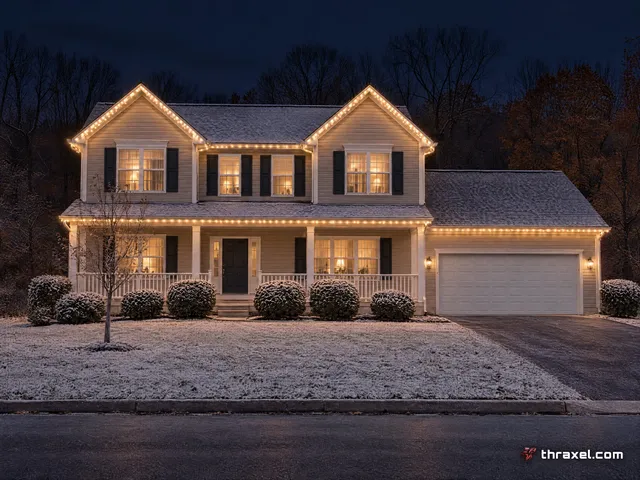
Erie, PA
Lakefront lighting built for Erie's weather
Erie sits right on Lake Erie, about 130 miles north of our Kittanning base, and gets a heavier, wetter winter than almost anywhere else in the state because of lake-effect snow. Lighting here has to handle more than a typical Western PA install.

Lake-effect snow is a different problem
Erie regularly sees some of the heaviest snowfall totals in Pennsylvania because of lake-effect bands rolling off Lake Erie, dumping accumulation in a way that inland Armstrong County simply does not experience the same way. That means more sustained snow load sitting on a roofline for longer stretches of the winter.
Permanent track built for a milder inland winter would be a real risk here. The system installed in Erie is the same IP67 marine-grade, salt-tested build used everywhere else in the footprint, just tested against conditions closer to what it actually has to survive.
The lakefront corridor also sees repeated freeze-thaw cycles as temperatures swing near the water, which is harder on standard exterior fixtures than a steady cold snap further inland. The 16-gauge wire and sealed housings are built to flex through that cycling rather than crack under it.
Why one Erie install matters here
Thraxel's residential tracking includes an Erie, PA colonial with 312 feet of roofline lit across 6 zones that appraised $42,000 higher after the install, and two neighbors on the same street signed for their own systems that same season, a directional result from 2023 to 2025 tracking and not a guaranteed outcome for every home.
It is one of the clearer examples in the data of the neighbor effect showing up in a lakefront market, where curb appeal after dark tends to travel down a street quickly once one house does it well.
Across Thraxel's broader residential tracking from 2023 to 2025, 11 of the last 14 permanent installs had at least one neighbor on the same street book within 18 months, a pattern the Erie colonial fits, though every market and street is different.
- 312 feet of roofline across 6 zones on the referenced Erie project
- Appraised value increased by $42,000 after the install, directional not guaranteed
- Two neighbors on the same street booked the same season
Marine-grade matters on the lake
Homes closer to the shoreline deal with the same moisture and corrosion concerns as any lake or river property, plus the added exposure of lake-effect storms rolling through repeatedly across a single winter. The IP67 silicone housings and 16-gauge wire used across the whole system are built with exactly that kind of repeated exposure in mind.
For a genuinely lakefront property with a dock or shoreline feature, the same marine-grade lighting used on Western PA docks applies here too, salt-tested and sealed the same way.
Every pixel is individually addressable, which matters on a lakefront roofline exposed to more weather cycling than average. If one pixel does eventually fail, the controller identifies which one, so a service visit is a targeted swap rather than a full re-inspection of the run.
Scheduling an install this far north
Erie is further from Kittanning than most of the footprint, roughly 150 minutes by drive time, which puts it on a wider rotation than the daily 16xxx route closer to home. It is still fully within the service area, and consultations, design mock-ups and installs are handled to the same standard.
Given the heavier winter weather window, booking earlier in the fall gives more flexibility around install-day weather, since the crew installs only when conditions actually permit it.
Erie also falls under the same 3-year parts and 1-year labor warranty as the rest of the footprint, and Thraxel is fully insured on every job regardless of distance from Kittanning. Nothing about the warranty or the install standard changes because a property sits near the lake instead of the river.
What Erie homeowners typically ask about cost
Permanent roofline systems commonly fall somewhere between $20 and $50 per linear foot installed under broad national estimates, and every quote is free and specific to the property measured. A larger colonial with multiple zones, similar to the referenced Erie project, will naturally land toward the higher end of that range.
Once installed, the system costs about $52.80 a year to run for a typical 168-LED install used six hours a night, regardless of how far north the house sits.
Financing at 0% APR for up to 24 months is available to qualifying buyers, which is worth asking about on a larger multi-zone Erie roofline where the linear footage adds up faster than on a smaller inland home.
Getting started in Erie
The process starts the same way it does everywhere else in the footprint: a free on-site consultation and a design mock-up returned within 24 hours. Reach out through thraxel.com/quote/ or email hq@thraxel.com to get a visit scheduled before the lake-effect season rolls in.
For anyone still deciding between a permanent system and a single classic season on the roofline, thraxel.com/blog/permanent-vs-seasonal-christmas-lights/ lays out the tradeoffs in more detail, useful before committing to either program on a lakefront property.
A demo case with four live RGBWW strips on 128 LEDs comes along on the first visit, so an Erie homeowner is scrolling through actual colors on the driveway before making any decision, not just looking at photos of someone else's install.
Most Erie installs wrap up in one to two days once the render is approved, and a final walkthrough covers the app before the crew heads back down toward Kittanning, so the household is running its first scene the same night, not weeks later.
For anyone weighing a seasonal display against a permanent one on a lakefront property, a single classic winter of C9 lighting is still available too, full white-glove service through thraxel.com/christmas/, useful for a home about to be re-roofed before committing to permanent track.
Whichever program fits, the same crew handles the visit from start to finish, no subcontractor and no separate regional office managing the Erie stops apart from the rest of the footprint.