For contractors
What gutter and roofing crews do with their off-season
Roofing and gutter work slows down once the ladders come off the schedule for winter, right around the same stretch when lighting demand turns on. Crews that already spend their days at fascia height are a natural fit for that gap.
The calendar problem this solves
Most gutter and roofing outfits in Western PA see work taper by late fall, then go quiet through winter until spring storms and ice-dam repairs pick back up. That is exactly the window when both seasonal Christmas lighting and permanent roofline installs are busiest, which makes the timing overlap almost too convenient to ignore.
A crew that already has trucks, ladders, harnesses and a fascia-and-eave skill set does not need to reinvent its operation to fill that gap. It needs a product line and a supplier, not new trades, which makes lighting one of the lower-friction ways to add off-season revenue.
Why fascia work translates directly
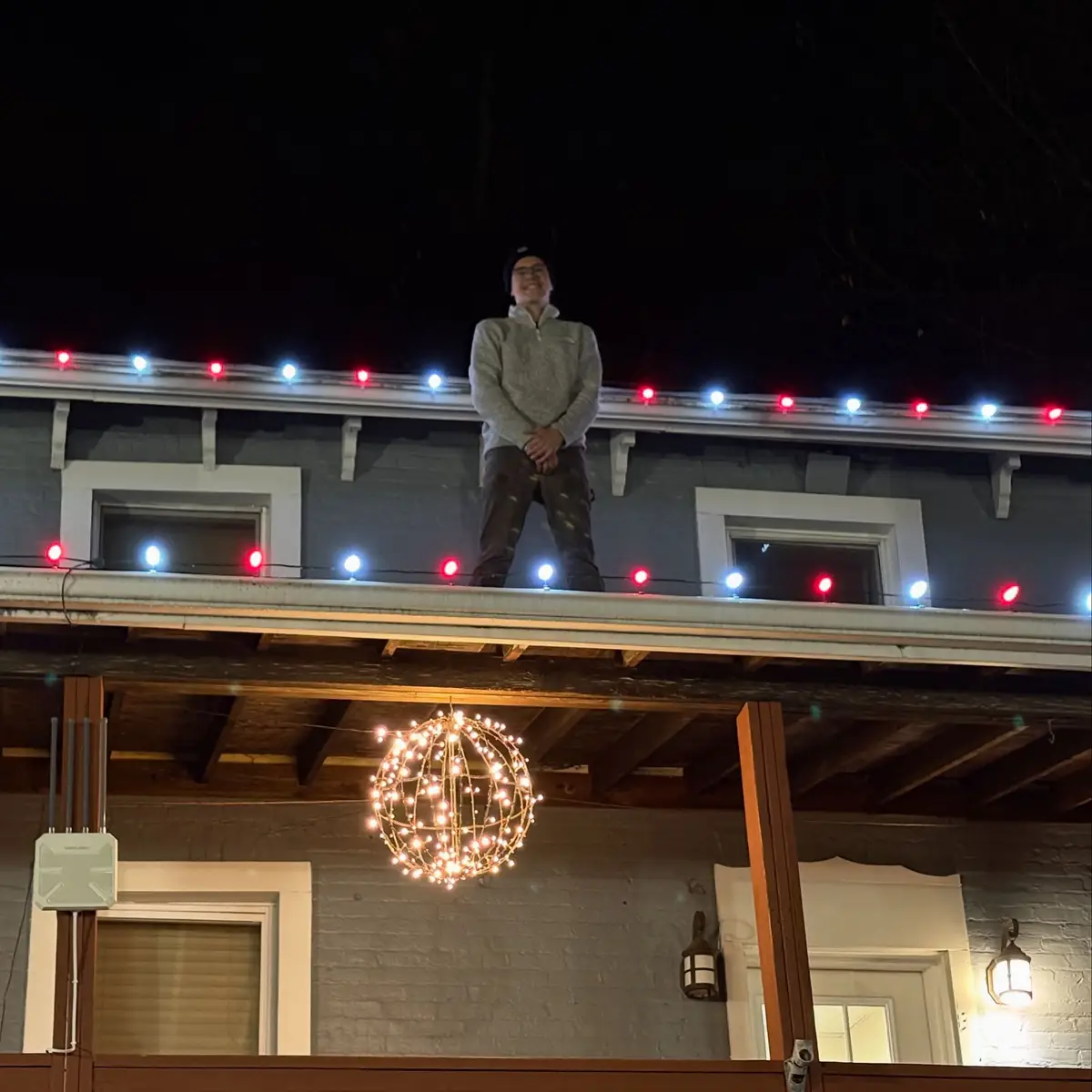
Roofline lighting, whether it is a seasonal C9 hang or a permanent color-matched track system, mounts along the same fascia and eave lines a gutter crew measures and fastens against every day. The muscle memory for working that edge of a roof at height is already there.
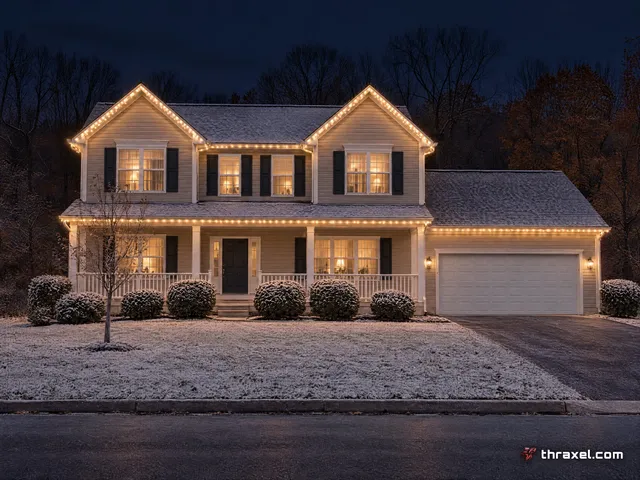
Permanent track in particular gets mounted tight against the fascia and trim so it reads as invisible by day, which rewards a crew that already thinks carefully about clean fastening and finish work along a roofline instead of just hanging a product and moving on.
Two different products, two different seasons
Seasonal Christmas lighting is a short, intense window: design, install through November, in-season repairs, then takedown starting January 4. It is a good fit for a crew that wants a defined start and end date and does not want a year-round service commitment.
Permanent lighting installs run more like a construction job. Track goes up once, generally outside the peak holiday crunch, and the homeowner runs it themselves afterward through an app. For a roofing or gutter crew, permanent work can be scheduled earlier in the fall or even into spring, spreading the off-season revenue across a longer stretch instead of cramming it into November.
- Seasonal C9: short install window, defined takedown date, recurring annual revenue
- Permanent track: one-time install, can be scheduled outside the holiday crunch, ongoing brand presence on the house
What changes and what does not
The biggest shift for a roofing or gutter crew is sourcing. Retail Christmas light kits and consumer landscape strands are not built to the same spec as commercial-grade product, and installing something that fails mid-season creates a callback that eats the margin a lighting line was supposed to add.
An approved Thraxel installer sources IP67 marine-grade silicone lighting on 16-gauge wire and commercial-grade controllers at dealer pricing through the wholesale catalog behind thraxel.com/shop/, the same components category used on Thraxel's own residential and commercial jobs.
What does not change is the client relationship a roofing or gutter crew has already built. A homeowner who trusts you enough to replace their gutters is more likely to trust a lighting bid from the same company than a cold quote from an unfamiliar installer, which is a real advantage most crews underuse.
The seasonal cash flow argument
Roofing and gutter revenue tends to spike around storm season and taper heavily by late fall, leaving a stretch where overhead keeps running with no matching income. Lighting work, split between an earlier permanent install window and a later seasonal push, fills a meaningful part of that gap with planned, bid work rather than reactive storm calls.
It also diversifies revenue away from weather dependency. A roofing business that only makes money when something breaks is exposed every time a mild winter arrives. A lighting line generates revenue on a predictable calendar regardless of storm activity, which smooths out a business that would otherwise swing hard with the weather.
Where this fits a real off-season schedule
A rough shape that works for a lot of crews: permanent installs in October and early November before the holiday crunch, seasonal C9 hangs through mid-November into the first weeks of December, then a lighter maintenance and service stretch through the rest of the season while winter roofing work stays slow anyway.
That schedule does not eliminate ice-dam and emergency roof calls, which still come in through winter regardless. It fills the predictable dead weeks around them with planned, bid work instead of leaving the calendar empty.
Getting set up before fall
The application at thraxel.com/shop/ is the entry point for wholesale pricing, and it is worth applying well before the fall crunch rather than during it, since Thraxel reviews every submission personally and approval takes a few business days.
For a crew deciding which product line to lead with, thraxel.com/permanent/ shows the year-round system and thraxel.com/christmas/ shows the seasonal program, which is a fast way to see which one matches the calendar gap you are actually trying to fill.
A crew that has never quoted a lighting job before does not need to launch both product lines at once. Picking one, running it through a full season, and adding the second once the first is comfortable is a lower-risk way to build the new line without overloading a crew still learning the trade.
The client relationship advantage roofing crews already have
A roofing or gutter company usually has a list of past clients who already trust them enough to have had a crew on their roof once before. That list is a warmer audience for a lighting bid than any cold marketing campaign, since the relationship and the trust in the crew's work quality already exist.
Reaching back out to past clients about a seasonal or permanent lighting install, timed for early fall before the holiday rush, is one of the simplest ways to fill an off-season calendar without spending on new client acquisition at all.