Kit vs system
Marketplace light kits vs commercial-grade systems: what the price gap buys
A permanent lighting kit from an online marketplace and a commercial-grade installed system look similar in the product photos. On a fascia in February they behave very differently. Here is what the extra money actually covers, and when the kit is the smarter buy.

What you are comparing
A marketplace kit is a box of LED strip or pucks, a plastic channel or clips, a plug-in controller and a phone app, shipped to your door for you to mount. A commercial-grade system is an engineered assembly: pixels sealed in a housing, seated in aluminum track, wired to a rated power supply and controller, installed and warrantied by a crew that has to answer for it.
The kit is cheaper because it skips most of that. Sometimes skipping it is fine. A renter, a first-time homeowner testing the idea, or someone lighting a shed does not need marine-grade anything. This post is about knowing which parts you are giving up, so the decision is deliberate.
Where the kit wins
Price is the headline. A kit for a modest roofline costs a fraction of an installed system, ships in two days, and nobody comes to your house. If you are handy and the roofline is one story, you can have it running the same weekend.
Kits also win on commitment. Nothing is permanent about a kit if you decide you hate it, and pulling it off in spring is easy. That matters for renters, for a house you plan to sell, and for anyone who wants to try color on the house before spending real money. It is a reasonable experiment.
- Low entry price and fast shipping
- No installer, no appointment, no track on the fascia
- Easy to remove if you move or change your mind
Where the kit gives up ground
Start with white. Most consumer kits are RGB only, which means warm white is faked by mixing red, green and blue at once. The result reads faintly pink or green next to a real warm-white porch light. Commercial RGBWW pixels carry a dedicated 2700K warm-white diode, so the everyday look is a true white. We explain the physics at thraxel.com/blog/rgbww-vs-rgb-explained/.
Then weather. Western PA hands a roofline ice, freeze-thaw, wind off the river and July sun. Many kits are rated for splash resistance rather than submersion, use thin wire, and mount with adhesive or plastic clips that go brittle in a January cold snap. Commercial systems use IP67 silicone housing, 16-gauge wire and color-matched aluminum track screwed to the fascia.
Finally, the failure story. When a kit section dies, you are diagnosing it yourself, and a replacement segment may or may not match. On an individually addressable commercial system, one dead pixel is identified on its own and the swap is usually same-day. Kits also rarely carry a meaningful warranty once they are mounted outdoors.
- RGB-only white versus a true 2700K diode
- Splash rating versus IP67 marine-grade housing
- Thin wire and clips versus 16-gauge wire in aluminum track
- You are the repair department versus a 3-year parts warranty
What commercial-grade actually means
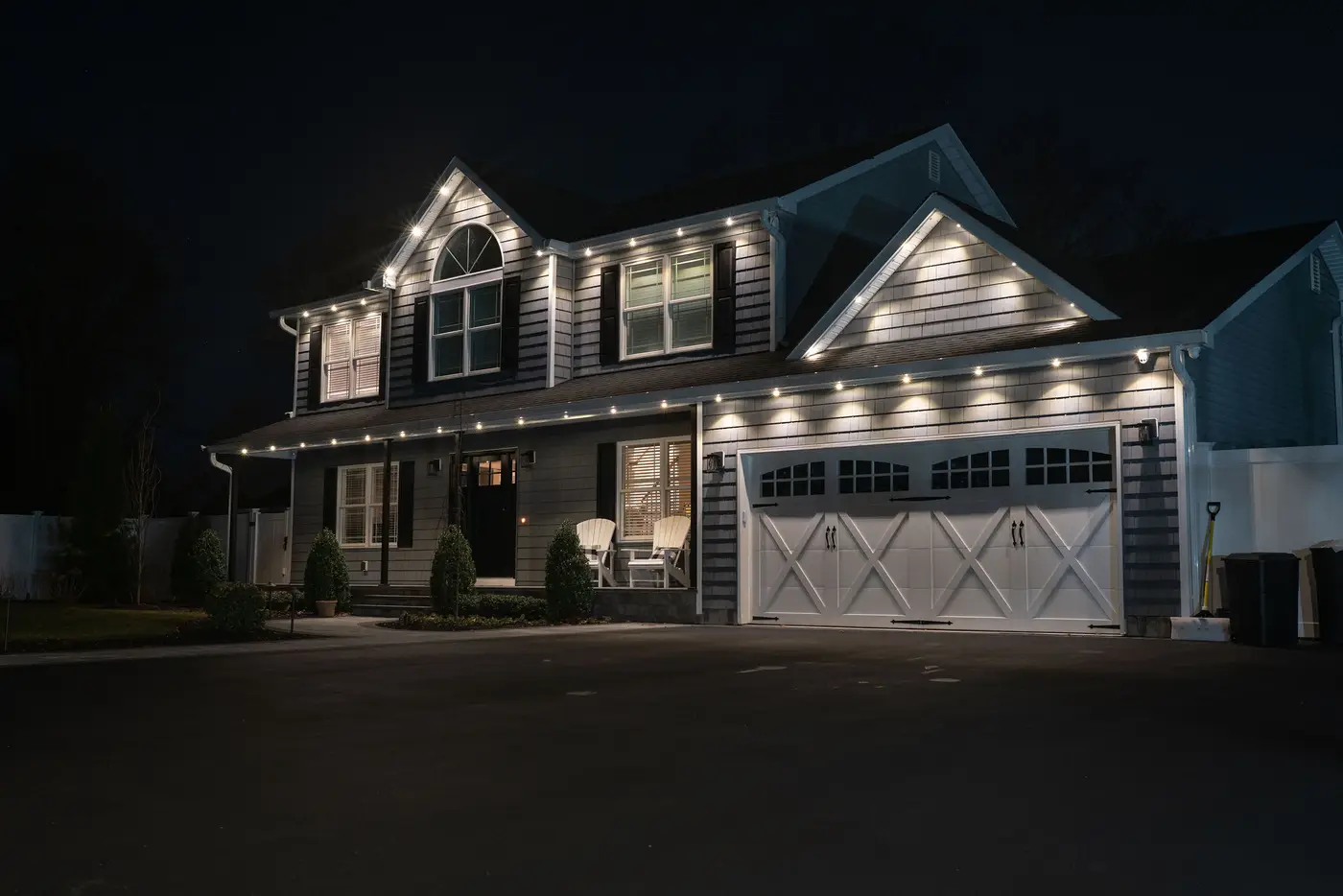
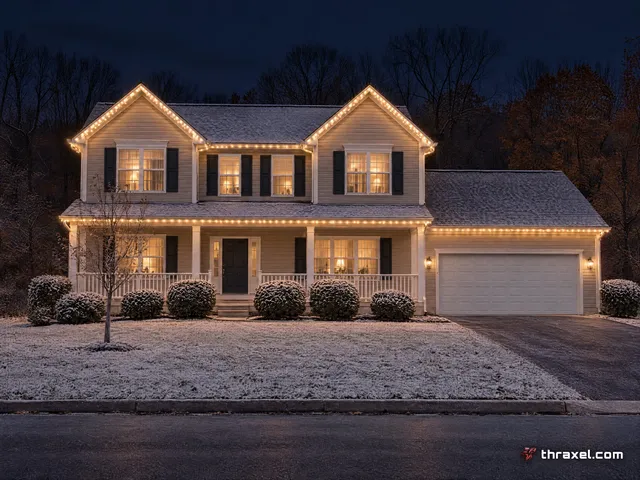
It is a specification, not a slogan. In our case: RGBWW pixels with 16 million colors plus the warm-white diode, individually addressable, IP67 marine-grade silicone that has been salt-tested, 16-gauge wire, and track that is color-matched to your trim so the roofline reads clean by day. Components carry UL, ETL and CUL certification, and the crews hold the manufacturer-required install certifications.
The controller is the other half. The system runs from the Thraxel Lighting app and ties into Alexa, Google Home, Apple HomeKit and Control4, so it becomes part of the house instead of a separate gadget. Full details live at thraxel.com/permanent/ and the warranty terms are at thraxel.com/warranty/.
Cost, in national terms
We keep Thraxel pricing out of blog posts because every roofline measures differently. For scale, national industry estimates for installed permanent lighting commonly fall between roughly $20 and $50 per linear foot. Your roofline will differ, and that is why the consult is free. A marketplace kit for the same footage will be well under that, and the difference is the labor, the hardware grade, the warranty and the service.
The fairer comparison is over years. A kit that lasts two or three winters and then gets replaced starts to close the gap, and a system with 3 years on parts and 1 year on labor, plus a crew a phone call away, stops being the expensive option somewhere in the middle of the decade. Power cost is nearly identical either way, around $52.80 a year for a typical 168-LED run at six hours a night.
How to see the difference before you buy
We bring a demo case to every consultation: a tactical hard case with four live RGBWW strips, 128 LEDs, set on the driveway and controlled from the app in your hand. Scroll to warm white and hold it next to your porch light. That thirty seconds settles the RGB question better than any paragraph.
If the kit still fits your situation, buy the kit. If you are staying in the house, lighting more than a porch, or living in an HOA in Cranberry Township or Wexford where the daytime look matters, get the installed quote. Request one at thraxel.com/quote/ and the render of your house comes back within 24 hours.